
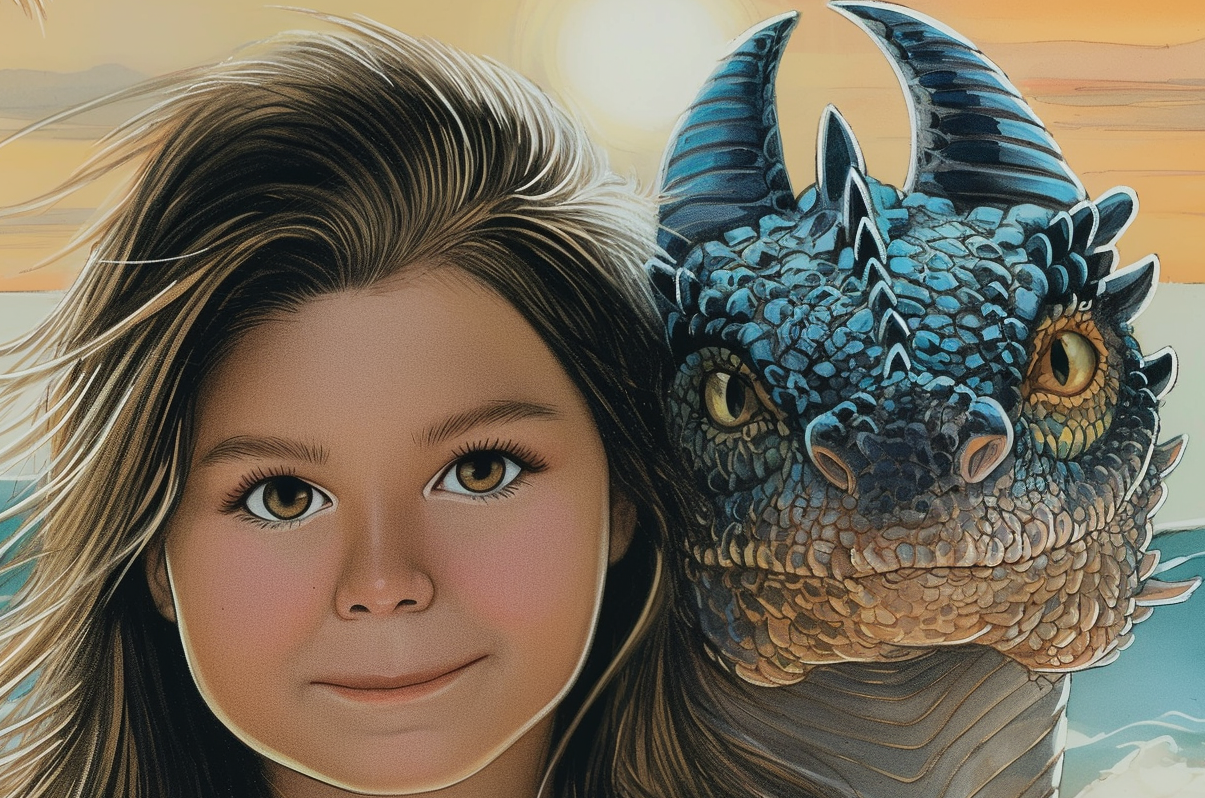
Imagination is the gateway to a child’s world, where every possibility is just a thought away. At Sir Reggie’s Books, we believe that nurturing this magical faculty is not just about reading stories, but about embarking on adventures that ignite the mind and spark creativity. The power of books to transport children to distant lands and fantastical realms is undeniable, but what if we could take these imaginary journeys a step further? Imagine the thrill of visiting the very places you’ve read about, turning pages into paths and stories into experiences. In this article, we explore how visiting real places from books can inspire children’s imagination, enhancing their cognitive and emotional development, and fostering a deeper connection with the world around them. Join us as we delve into the magic of imagination, the importance of books, the impact of real-world visits, and practical tips for making these experiences enriching and unforgettable.
Introduction to the Power of Imagination in Childhood
The Role of Imagination in Cognitive Development
Imagination plays a crucial role in the cognitive development of children. According to the American Psychological Association (APA), children who engage in imaginative play and storytelling develop enhanced creativity, problem-solving skills, and emotional intelligence. When children imagine and visualize different scenarios and situations, their brains are stimulated in ways that contribute to their overall mental growth. This process helps them learn how to think outside the box, fostering an environment where innovation and creativity can flourish.
How Imagination Influences Emotional and Social Development
Imagination also plays a vital role in a child’s emotional and social development. By creating fictional scenarios, children can explore their emotions and learn how to express them in a safe and controlled environment. For instance, a child might imagine a scenario where they are helping someone in need, which can boost their self-esteem and empathy. Additionally, imaginative play often involves social interactions, such as role-playing or storytelling with peers, which helps children develop important social skills like cooperation, negotiation, and empathy. These skills are essential for forming healthy relationships and navigating social situations in the real world.
The Role of Books in Sparking Imaginative Thinking
Books are more than just a source of knowledge; they are powerful tools for sparking imaginative thinking. When children engage with stories, they are not just absorbing information—they are actively constructing mental images, scenarios, and emotions that help them develop a rich and vibrant imagination. Here’s how books contribute to this process:
Fostering Creative Visualization
One of the most significant roles of books in imaginative thinking is their ability to foster creative visualization. When children read a book, they are asked to imagine the characters, settings, and situations described in the narrative. This process of visualization is crucial because it engages the brain in a way that traditional educational methods often do not. For instance, when a child reads a story about a magical forest, they are not just listening to words—they are creating a vivid image of that forest in their mind. This skill is particularly important as it helps children develop a strong visual and spatial awareness, which can later translate into better problem-solving abilities and creativity in various aspects of their lives.
Expanding Cognitive Horizons
Books also play a critical role in expanding a child’s cognitive horizons. By exposing them to different cultures, ideas, and experiences, books can help children understand the world in a broader context. This exposure can be particularly enriching for children who may not have the opportunity to travel widely. For example, a story set in ancient Egypt can introduce children to historical concepts and cultural practices that might not be covered in their local curriculum. This exposure not only broadens their knowledge but also encourages them to think critically about the world around them. It helps them develop the ability to question, analyze, and synthesize information, skills that are essential for imaginative thinking.
In conclusion, the role of books in sparking imaginative thinking is profound and multifaceted. By engaging children in the act of visualization and expanding their cognitive horizons, books not only enhance their understanding of the world but also empower them to think creatively and innovatively. At Sir Reggie’s Books, we believe that every story has the potential to inspire, educate, and transform.
The Impact of Visiting Real Places After Reading About Them
When children read about a place, they imagine it within the confines of their own minds. However, visiting the real place can have a profound impact on their imagination and overall learning experience. The tangible reality of a location provides a depth of understanding and a sense of authenticity that is hard to replicate through reading alone.
Enhanced Memory and Retention
Research has shown that children who visit places they have read about tend to retain more information and recall it more accurately. This is because the act of traveling to a real place engages multiple senses—sight, sound, smell, and touch—which creates a more memorable experience. For instance, when a child reads about the ancient ruins of Rome, visiting the actual site can help them better understand the historical context, the architecture, and the cultural significance of the place. This hands-on experience can lead to a deeper and more lasting memory of the location and its history.
Increased Curiosity and Engagement
Visiting real places can significantly boost a child’s curiosity and engagement with the content they have read. When children see the actual sites, they are more likely to ask questions and seek out additional information, which can lead to a more enriching educational experience. This curiosity often extends beyond the initial visit, encouraging children to continue reading and learning about the places they have visited. For example, after a visit to the Louvre Museum, a child might be inspired to read more about French history or art, leading to a broader and more comprehensive understanding of the world.
Moreover, the excitement and wonder of seeing a place in person can make the learning process more enjoyable and less like a chore. This positive association can foster a lifelong love of learning and exploration, inspiring children to seek out new knowledge and experiences both in books and in the real world.
Case Studies: Real Examples of Children’s Enrichment Through Book Travel
Case Study 1: The Magical Adventures of Lucy and Edmund in Narnia
In the world of C.S. Lewis’s “The Chronicles of Narnia,” the characters of Lucy and Edmund experience a transformative journey from their mundane home to the fantastical land of Narnia. A school in the UK implemented a book travel program where students read “The Lion, the Witch and the Wardrobe” and then visited Narnia’s locations depicted in the book. Students not only read the book but also researched the geographical, historical, and cultural contexts of the locations. The results were nothing short of magical:
– **Increased Curiosity and Engagement:** The students showed a significant increase in their interest in reading and learning about diverse cultures and historical periods. They were eager to explore more books and learn about different regions.
– **Improved Writing Skills:** Students wrote detailed journals about their journey through Narnia, detailing their experiences, emotions, and reflections. This enhanced their descriptive and narrative writing skills.
– **Enhanced Critical Thinking:** By comparing the fictional world of Narnia with real-world geography and history, students developed a better understanding of causality and the impact of historical events on societies.
Case Study 2: The Enchanting World of Hogwarts in Harry Potter
Another successful program involved students from a middle school in the United States, who read J.K. Rowling’s “Harry Potter and the Sorcerer’s Stone.” The school organized a field trip to visit places that inspired the story, such as the Edinburgh Castle, which inspired the Forbidden Forest, and the historic Inverness, which resembled Hogsmeade. The outcomes were equally impressive:
– **Boosted Imagination and Creativity:** Students were inspired to create their own magical worlds and characters, leading to the development of numerous creative writing projects and art pieces.
– **Improved Social Skills:** The field trip allowed students to interact with peers and collaborate on various activities, fostering teamwork and social skills.
– **Increased Cultural Awareness:** Through the visit to Edinburgh, students gained a deeper understanding of Scottish culture and history, enriching their knowledge and appreciation of different cultures.
These case studies demonstrate the profound impact of book travel on children’s imagination and learning. By combining literary experiences with real-world exploration, educators can create engaging and enriching learning environments that inspire children to explore the world beyond the pages of their books.
Practical Tips for Parents and Educators to Foster Imagination Through Travel
Travel can be a powerful tool to ignite a child’s imagination, making reading and learning more engaging and meaningful. Here are some practical tips for parents and educators to incorporate travel into their educational and parenting strategies.
1. Plan a Themed Family Adventure
Choosing a destination that ties into a book or topic your child loves can be a great way to spark their interest and imagination. For instance, if your child has been captivated by stories set in the rainforest, plan a trip to a nearby national park or botanical garden. This not only enriches the learning experience but also makes the subject matter more tangible and relatable. You can enhance the trip by packing books and resources related to the destination, such as field guides, maps, or nature books. Encourage your child to keep a travel journal to document their observations and experiences, which can serve as a creative outlet and a keepsake.
2. Create a Travel-Based Learning Curriculum
For educators, integrating travel into the curriculum can make learning more immersive and effective. Consider assigning projects that require students to research and explore different locations, cultures, or historical events. For example, a unit on ancient civilizations could include a virtual or real visit to a museum or historical site, followed by a creative writing assignment where students imagine they are living during that time. To further enhance the learning experience, organize field trips to local landmarks or cultural events that align with the curriculum. This hands-on approach can help students connect theoretical knowledge with real-world experiences, fostering a deeper understanding and appreciation for the subject matter.
By incorporating these practical tips, parents and educators can create a rich, imaginative learning environment that goes beyond the pages of a book, making education a more engaging and rewarding experience for children.
As we reflect on the transformative power of books and travel in nurturing children’s imagination, it becomes clear that the combination of reading and real-world exploration is a potent recipe for cognitive and emotional growth. By enriching their reading experiences with visits to places described in literature, children not only deepen their understanding of the world but also develop essential social and emotional skills. This approach fosters a sense of accomplishment and excitement, making learning a joyful and immersive experience.
As Sir Reggie’s Books continues to inspire young minds, we look forward to seeing how the next generation of readers will embark on their own imaginative journeys, blending the pages of our books with the wonders of the real world. Let us embrace the magic of storytelling and travel, together shaping a future where imagination knows no bounds.